
Climatic and environmental conditions of Najaf Abad and its effect on power transformer
The climate of Najaf Abad has special characteristics that ignoring them in the technical estimation of the transformer will greatly reduce the useful life of the device. This semi-arid climate region has very hot summers with direct sunlight, cold winters and a significant difference in day and night temperatures. In addition to temperature factors, the presence of fine dust from mines and quarrying industries in the air of the region acts as a destructive factor for insulation.
Increasing ambient temperature in the summer disrupts the natural heat transfer capability of the transformer. If the thermal class of the transformer insulation or its cooling system is not calculated correctly, the oil or winding temperature will quickly exceed the permissible threshold. This excess temperature causes rapid oxidation of the oil, destruction of the insulation paper, and finally short circuit phase to phase or phase to ground.
Altitude above sea level in Najaf Abad city is also a very important factor. With the increase in altitude, the density of air decreases and the dielectric property of air and the ability to dissipate natural heat decrease. Therefore, in the engineering and selection of a suitable power transformer for industrial electricity in Najaf Abad, the thermal power reduction factor known as the derating factor should be taken into account. Smart Power technical and engineering group, relying on field experiences in industrial projects in Isfahan province, applies all these regional factors in the technical calculations of power stations.
Types of power transformers in industrial electricity and practical comparison
In industrial projects according to voltage level, type of working environment, safety issues and fire fighting requirements, transformers are divided into two main oil and dry resin groups. Each of these models has its own characteristics and limitations that should be evaluated according to the needs of the factory.
Dry resin transformers, whose coils are cast in epoxy resin in a vacuum, are a unique option for indoor spaces and industries with high fire sensitivity. In factories where the substation is located near the production line, closed halls or warehouses of flammable materials, the dry transformer is an ideal option. This type of transformer does not require oil maintenance, the risk of ignition is close to zero, and it shows excellent resistance to moisture and dust, although it has a higher initial price than oil models. The engineers of the technical and engineering group of smart power suggest the best option between oil or dry transformer after checking the layout of the factory, the budget of the project and the level of fire risk.
Engineering calculations to determine transformer capacity in Najaf Abad industries
One of the most basic stages of equipment selection is the accurate calculation of the demand and rated capacity of the transformer in terms of kilovolt-amperes (kVA). A mistake at this stage leads to one of two costly problems: buying a transformer with too much capacity, which incurs heavy investment costs and no-load losses, or buying a transformer with low capacity, which causes overload, overheating of the transformer, constant tripping and production line shutdown.
To accurately calculate the capacity of the transformer, a list of all the electrical loads of the factory must first be collected, including electric motors, induction furnaces, compressors, lighting and ventilation systems. The nominal consumption power (kilowatt) of each consumer must be multiplied by the demand factor; Because all the equipments do not work at 100% of their power at the same time.
Besides these things, it is vital to consider the future development factor of the factory. Usually, the transformer is selected in such a way that its optimal working point is around 70-80% of the rated load. This work not only maximizes transformer efficiency and reduces copper losses, but also provides sufficient capacity to launch heavy loads and develop production lines in the future without the need to replace the substation.
Management of nonlinear loads and harmonic distortion in factories
Today, in most industries of Najaf Abad, such as rolling lines, turning and cutting machines, stone industries and processing workshops, the use of inverters (variable frequency drives VFD), industrial UPS equipment and rectifier and welding systems has been greatly expanded. These equipments are considered non-linear loads and inject strong harmonic currents into the system.
When choosing a power transformer for industries with high non-linear loads, transformers with a standard K-Factor should be used. With special multi-stranded conductors, improved insulation and special core design, these transformers tolerate harmonic losses well. By monitoring power quality and measuring voltage and current harmonics in factories, the experts of smart power technical and engineering group determine the type of transformer and, if necessary, passive or active filters to protect your internal network.
Safety considerations, protection and auxiliary equipment of the transformer substation
Choosing a transformer alone does not guarantee safe operation; Rather, it is necessary to design a comprehensive protection system to protect this valuable asset against network electric shocks and factory internal overloads. The power distribution network in industrial areas may experience transient overvoltages due to successive switching or lightning strikes.
Installation of polymer zinc oxide (ZnO) arresters in the medium pressure input of the transformer is the first line of defense against lightning and switching overvoltages. For oil conservatory transformers, Buchholts relay is recognized as the most sensitive tool for detecting partial discharge faults, internal sparks and gas generation in the transformer tank. Also, pressure relief relay, oil thermometer and coil equipped with alarm and trip contacts, and indicating the oil level, are the vital requirements of the power station.
On the low voltage and output side of the transformer, the use of air circuit breakers (ACB) or compact circuit breakers (MCCB) with accurate overload (L), short circuit (S and I) and ground fault (G) protections is essential for quick isolation in times of disaster. Harmonic protection design (Coordination) between upstream and downstream protection equipment is one of the key specialties of smart power technical and engineering group, which prevents unwanted outages in the entire industrial complex.
Optimizing energy consumption, efficiency and reducing demand costs
In today's industrial economy, power losses in transformers mean a direct waste of capital. The losses in the transformer are divided into two main parts: core losses or no-load losses (No-Load Losses), which are permanent and 24 hours a day regardless of the plant's load, and copper losses or pregnancy (Load Losses), which change proportionally to the square of the load current.
Choosing low-loss transformers in accordance with modern international standards (such as Ecodesign or Tavanir optimization standards), significantly reduces the current energy costs of a production unit during decades of operation. Although the initial price of low-loss transformers is slightly higher, their return on investment is realized in less than two years due to reduced electricity bills and reduced heat losses.
In addition to the inherent efficiency of the transformer, installing an automatic capacitor bank equipped with a harmonic filter next to the power transformer, by correcting the power factor and removing the reactive power from the transformer coils, frees the usable capacity of the device and prevents the payment of heavy reactive charges to the Najaf Abad Regional Electricity Authority. The smart power technical and engineering group implements the investment return and efficiency improvement plan for industrial units by analyzing electricity bills and consumption profiles.
Implementation steps and installation of power transformer in industrial substation
The process of buying power transformers until they are set up requires going through standard technical and administrative procedures. Engineers and craftsmen must carefully follow the following steps to achieve the best results:
Precise estimation of electrical load and preparation of technical documentation and single-line diagram to obtain demand permit from Isfahan Province Electricity Distribution Company or Najaf Abad Electricity Affairs.
The design of the structure of the power substation includes a foundation resistant to vibration and the weight of the transformer, cabling channels, an oil drain basin with a fire extinguisher net, and natural or mechanical ventilation windows suitable for the temperature conditions of Najaf Abad.
Standard and safe transportation of the transformer to the factory, placing the device on the foundation rails and securely connecting the protective earthing system and the body to a specialized earth well with a resistance below two ohms.
Basic cabling and busbars in 20 kV input and 400 V output using standard cables and cable washers with a calibrated hydraulic press, to prevent any loose connection and creating a hot spot.
Performing pre-commissioning tests including insulation resistance test, conversion ratio test, polarity and grouping test, ohmic resistance test of coils and oil dielectric analysis to confirm the health of the equipment after transportation.
Experimental power supply under the supervision of inspectors of the Electricity Department, checking phase-to-phase and phase-to-zero voltages in no-load mode, and then step-by-step loading of the factory's production lines.
Flawless implementation of these steps prevents the occurrence of human and equipment risks. Smart Power technical and engineering group performs all these steps from zero to hundred with official licenses and valid guarantees.
Why is smart power technical and engineering group the best choice for Najaf Abad industries?
Setting up and choosing the right power transformer for industrial electricity in Najaf Abad is a process that requires a combination of academic theory knowledge and years of practical experience in workshops and medium pressure substations. Smart Power Technical and Engineering Group, as a leading group in the field of design, supply, implementation and testing of distribution and sub-distribution substations of industrial electricity, is a reliable companion of the industrialists of this region.
Using experienced power engineers, this group provides comprehensive services including electrical load calculation, harmonic simulation, selection of reliable market transformer brands, construction of substation building structure and earth well, implementation of copper busbar and medium pressure cabling, installation of MV and LV switchboards, implementation of substation automation and conducting specialized temporary and permanent delivery tests.
Also, the approach of the technical and engineering group of smart power is based on maximum reliability and minimizing the employer's costs. By carefully evaluating the environmental conditions of your factory in Najaf Abad, this transformer set will be offered in accordance with the actual performance conditions, so that in addition to not paying extra costs, you can have peace of mind about the 24-hour operation of industrial machinery without voltage drop. Technical support, emergency troubleshooting and periodic maintenance are valuable services that ensure the continuity of your production chain with smart power.
summary
Choosing the right power transformer for industrial electricity in Najafabad is an infrastructural and long-term decision that affects the entire production process, the security of the power grid, and the financial efficiency of the plant. Ignoring summer heat, environmental dust, harmonic loads caused by modern equipment or common errors in demand estimation can lead to early failures and billions in damages. Paying attention to the type of transmission (oily or dry resin), energy efficiency, modern protection systems and specialized implementation based on today's standards paves the way to achieve a stable and successful production line. Entrusting this specialized process to committed and experienced groups such as Smart Power Engineering and Technical Group will guarantee sustainable productivity, peace of mind for employers and industrial prosperity of Najaf Abad region.
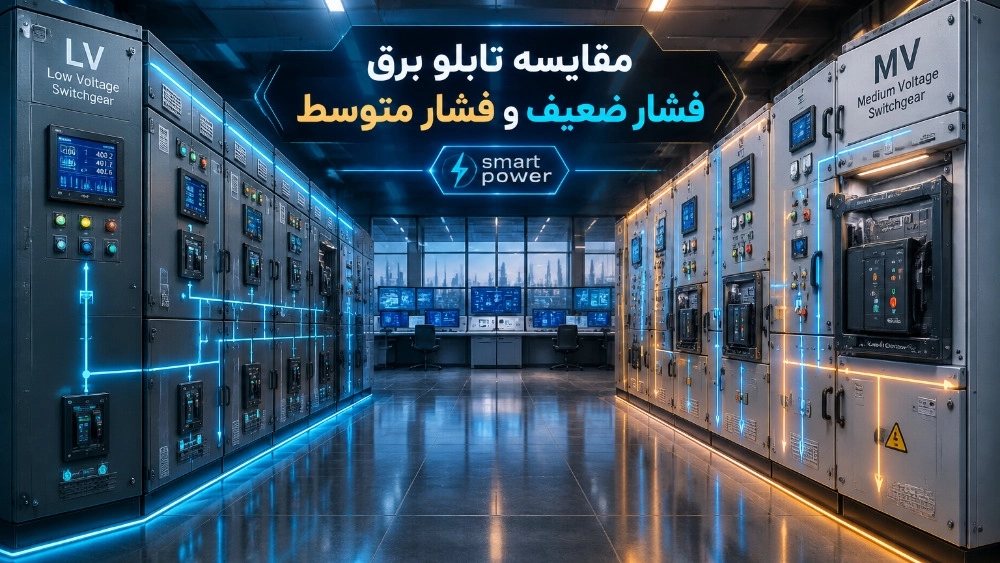
No, in low pressure, automatic air and compact switches are used, but in medium pressure, advanced vacuum or gas degenerators are used.
Due to the very high risk of electric discharge, severe arcs and the possibility of physical destruction caused by voltages of several kilovolts, these panels are required to have anti-arc mechanisms and strong steel celling.
This set of complete services includes feasibility, engineering calculations, design, production, assembly, installation and maintenance of low pressure and medium pressure switchboards.